


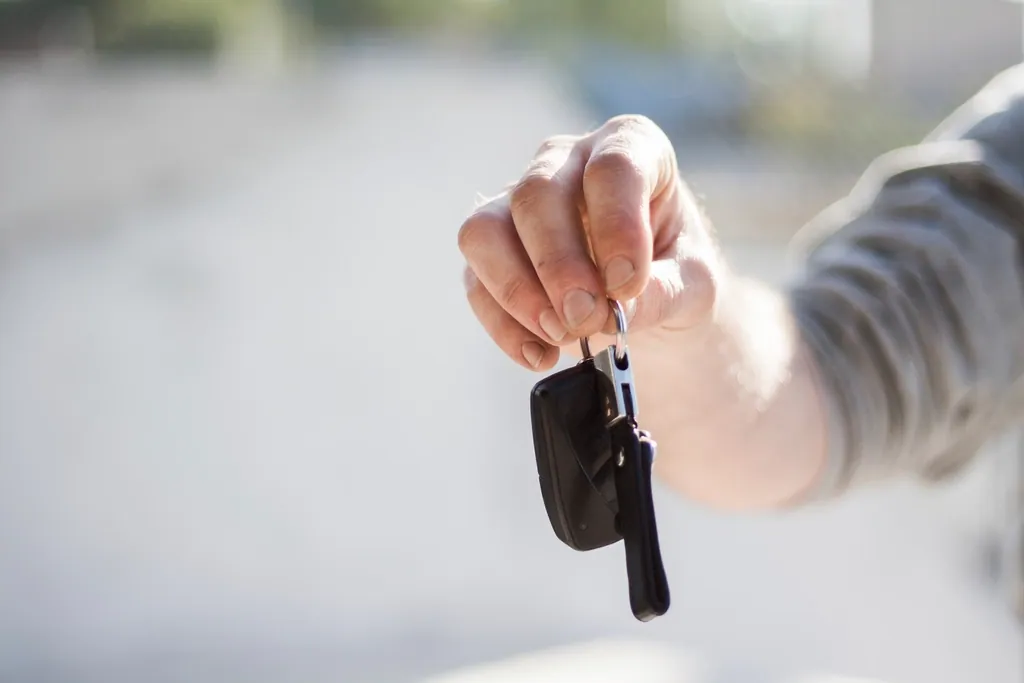
Car rental without a counter works, but only if you arrange three things in advance: who the customer is, how the key changes hands, and in what condition the car leaves and comes back. Anyone who sees car rental without a counter as "key in a safe and done" will have their first argument within a month about a scratch that "was already there". Anyone who sets it up as a fixed sequence with photos as evidence saves themselves a reception desk, also rents out at seven in the morning and on Sundays, and has hours left over for work that brings in money. Below you can read how to set that up, which method of key handover suits which business, and when you are better off keeping the counter.
In short
 There are three ways to hand over a key without staff: a key safe with a code, a keyless box in the car, or a key at a partner location.
- Without a counter the check moves to the moment of booking: you arrange driving licence, identity and deposit in advance, not at pick-up.
- Eight fixed photos at pick-up and return, taken by the customer himself, are your most important evidence in the event of damage.
- Start with one car and one key safe, and only scale up once the protocol has run for three months without an argument.
Car rental without a counter, also called unstaffed car rental, is a way of renting in which the customer picks up and returns the vehicle without a member of staff being present. Identity check, payment, key handover and damage recording take place online in advance or on the spot through a key safe, a phone or photos.
Which key handover suits car rental without a counter?
The choice of method determines almost everything that comes after it: how much you still do yourself, what can go wrong and what it costs per car. This table sets the three common methods for small and medium-sized car rental businesses side by side.
| Method | How it works | What you still do yourself | Biggest risk | Suits |
| Key safe with a combination code | Safe on the outside wall or on the vehicle. The customer gets the code in the pick-up instructions. | Change the code after every rental, check the key on return. | The code is passed on, or the key is not back in the safe. | 1 to 10 vehicles at one location, rental per day or longer. |
| Keyless box in the car | A small box in the vehicle unlocks through the customer's phone. You see mileage and location remotely. | Installation per car, subscription with the provider, explanation to the customer. | Dependent on mobile coverage and battery. Fixed costs per vehicle, even when it stands idle. | 10 or more vehicles, several locations, rental per hour or half-day. |
| Key at a partner location | A petrol station, hotel or garage nearby hands over the key against name and driving licence. | Arrangements with the partner, a fee per handover. | You are tied to the partner's opening hours and have no view of the condition of the car at handover. | Locations where you are never present yourself, such as a second city or a holiday region. |
Read the table from right to left. Start with your own situation, then look at the risk you can bear, and only then choose the technology. A rental business with six vans behind its garage has all it needs in a good key safe; for that business the keyless box is a subscription to a problem it does not have.
The check moves from the counter to the booking
At a counter you do in thirty seconds what has to be arranged in advance without one. You look at whether the driving licence is in order, whether the person in front of you is the same as on the card, and whether the deposit has been paid. Without a counter all of that has to be in the booking process, otherwise at seven in the morning someone is standing at your key safe of whom you only have an email address.
Take a rental business with seven vans in Apeldoorn. A customer books a van at ten in the evening for seven the next morning. Without a counter that looks like this: besides name and address, the booking form also asks for the licence number, the category and the date of birth. The deposit goes through a payment request before the pick-up instructions are sent. At half past six in the morning the customer gets a message with the location of the key safe, the code and the eight photos he has to take before he drives off. The owner is still in bed at that point.
Two warnings about that check in advance. Checking a driving licence is allowed; storing a copy is bound by rules, and those can be found at the Dutch Data Protection Authority. So ask only for what you need to identify the customer and handle the rental, and do not keep it longer than is necessary for that. And have the customer take a photo at pick-up of his driving licence next to the mileage on the dashboard. Then you know that the person with the licence is also the one who drove off, without having to keep a separate copy.
Photos are your new counter
Without a member of staff there is nobody to walk around the car on return. The customer takes over that role himself, and that works better than it sounds, provided the assignment is precise. "Just take a few photos" produces three blurry pictures of the front. "Take these eight photos, in this order" produces evidence.
The photo protocol that holds up in practice consists of eight fixed shots at pick-up and at return: the four corners of the vehicle at an angle from the front and from the rear, so that every side and bumper is in view; the dashboard with mileage and fuel gauge; the left and right sides straight from the side, with wheel rims; and the interior from the driver's door. The customer sends them through the channel you specify, with the timestamp from his phone. You take the same eight photos when cleaning the vehicle after return.
How that plays out: a customer returns a van and a day later you see a dent in the right-hand sliding door. Without photos that becomes a yes-you-did, no-I-did-not argument for which, in practice, you do not dare withhold the deposit. With the photo of the right side at pick-up, without a dent, and the photo at return, with a dent, the conversation is over in one message. Withholding the deposit after damage is then no longer a row but an administrative act; how to do that properly is covered in the article on deposits and damage in equipment rental.
Fines, refuelling and late returns
Three things work slightly differently without a counter from what you are used to, and you arrange all three in your terms before the first customer drives off.
In the Netherlands, traffic fines end up with the registered keeper, and that is you. Under certain conditions you can pass a speed camera fine from a rental period on to the customer, but only if you can show who was driving at that moment: name, driving licence and the exact rental period. The procedure for this can be found on the website of the Central Judicial Collection Agency (CJIB). This is the reason the licence number and the pick-up and return times have to be in your booking, and not only in your head.
You arrange refuelling with one rule: pick up full, return full, and the photo of the fuel gauge counts. Without a counter there is nobody to notice a half-empty tank, so the photo does that job. State in your terms what a tank that is not full costs, so you can deduct it from the deposit without argument.
A late return is harder to notice without a counter and easier to let happen. Work with a fixed return time, a rate per hour or part of an hour after it in your terms, and an automatic message an hour before the return time. Most people who are late are not late on purpose; a reminder solves more than a penalty.
When you are better off keeping the counter
Unstaffed rental is not a goal in itself. There are situations in which the counter, or at any rate a handover in person, is simply better.
For vehicles with a high value or a high excess you want to have seen the customer. For a new customer without a history, the first rental in person and the second remotely is a workable middle course; many rental businesses do it exactly like that. At a location without a line of sight or a camera, where the key safe hangs on a quiet rear wall, you take on risk that you do not earn back with photos. And if your terms are not yet on paper, start there, not with the key safe.
Rental to young drivers and rental of campervans that need a lot of instruction also lend themselves poorly to a key safe. You do not explain the gas hob and the water tank in an email.
How to start this week
- Choose one vehicle and one method. For almost everyone that is a key safe with a combination code on the outside wall, within range of a camera or a window.
- Put the handover protocol on one sheet of A4: the eight photos, the fuel rule, the return time, and who changes the code after return. Hang it next to the key safe and send it along with the pick-up instructions.
- Extend your booking form with licence number, category, date of birth and an agreement to your terms, and only send the pick-up instructions after the deposit has been received. In Bookedin's booking system for car rental you put those fields in the booking form yourself and the confirmation with your pick-up instructions goes out automatically; you send the key safe code itself separately, or you use a code per vehicle that you change after every rental.
- Schedule the message before the return time and the check after it as fixed actions, not as something you do when you think of it.
- Run it for three months with customers you already know. Note every argument, however small, and adjust the protocol before you hang a second vehicle in the key safe.
Car rental without a counter is not a question of technology but a question of process. The key safe is the cheapest part; the protocol around it determines whether you are still happy with it after a year. Rental businesses that do it well do not sell less service but more availability: the van is ready when the customer needs it, even when the owner is not there. Anyone who tries that without photos, terms and checks in advance pays for the counter after all, only then in dents.
Last checked on 8 October 2026. This article is not legal advice.
Frequently asked questions
Yes, in the Netherlands there is no rule that requires a staffed handover. You do remain responsible for the same things as with a counter: a rental agreement with an identifiable customer, a valid driving licence for the vehicle, and insurance that covers rental. Check that last point with your insurer, because not every policy allows an unstaffed handover unless you have reported it in advance. In addition, set out in your terms how the handover works and which photos are compulsory, so the customer knows what he is signing for.
Ask for the licence number, the category and the date of birth in the booking form, and have the customer take a photo of the licence next to the mileage on the dashboard at pick-up. That links the person to the vehicle and the moment without keeping a separate copy. Ask only for what you need and do not keep it longer than the rental and its settlement take; the rules for this can be found at the Dutch Data Protection Authority (Autoriteit Persoonsgegevens). For checking identity in advance there are also services such as iDIN, with which someone identifies himself through his bank.
Ask for the deposit in advance through a payment request, or through a pre-authorisation with your payment provider if it supports that, and only send the pick-up instructions with the key safe code once the deposit has been received. State in your terms within how many days of the return you refund the deposit and which costs you may deduct from it: damage, a tank that is not full, a late return, fines. Refund quickly if everything is in order; a deposit that takes three weeks to arrive costs you more reviews than a scratch.
Send an automatic message an hour before the return time and phone if the car is still not there an hour after that time. Most delays are not unwillingness but a house move that overruns. Put a rate per hour or part of an hour after the return time in your terms and deduct it from the deposit. If your next customer is already waiting, that is the moment a key safe shows its limitation: you cannot shuffle vehicles around if you do not have them in hand.
The fine ends up with the registered keeper, and that is the rental business. Under certain conditions you can pass it on to the customer, but only if you can show who was driving at that moment: name, licence number and the exact rental period from your records. The procedure and the deadlines can be found on the website of the Dutch Central Judicial Collection Agency (CJIB). So include in your terms that fines from the rental period are for the account of the customer and that you may charge administration costs for passing them on.
A simple combination key safe for the outside wall costs a few tens of euros and has no subscription. A keyless box in the vehicle has a purchase price per car plus a monthly subscription with the provider, and so only becomes interesting from ten or so vehicles or for rental by the hour. For current prices, look at the providers themselves. Besides the purchase, also count the time you spend changing codes and checking keys; with a key safe that is the real cost item.
Any other questions? You can always email us at info@bookedin.nl.