

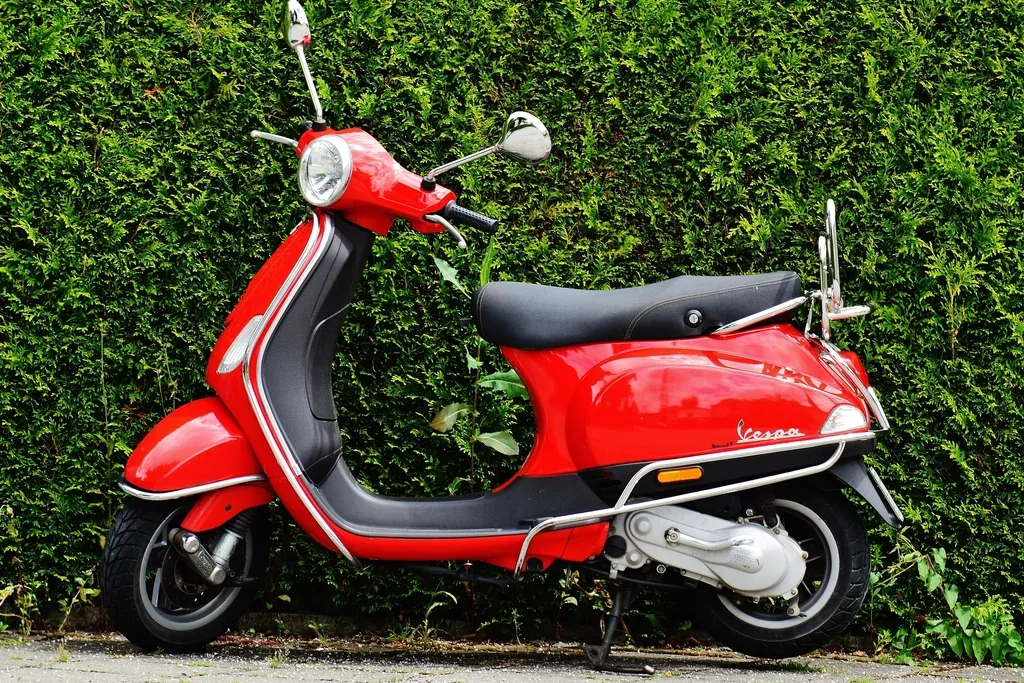
As soon as you rent out a scooter or e-chopper without arranging the driving licence and the deposit properly, you are playing Russian roulette with your fleet. A young customer who misjudges a bend and parks your brand-new Vespa against a bollard quickly costs you a thousand euros in broken body panels and a bent front fork. By linking the deposit directly to the excess on your business insurance and introducing a watertight licence check, you put the financial responsibility entirely on the person who caused the damage and protect the return of your business.
In short: In scooter rental in the Netherlands, a valid driving licence (AM, B or A) is required by law for every motorised vehicle with a number plate. Always verify the physical licence at handover and collect a deposit by debit card or credit card that corresponds exactly to the excess on your business third-party liability and comprehensive insurance.
A deposit in scooter rental is a guarantee amount paid in advance that the rental business holds in order to settle any damage, traffic fines or loss of the scooter with the customer directly and without the intervention of a court.
Driving licence and helmet requirement by type of rental scooter
Since the introduction of the national helmet requirement in the Netherlands on 1 January 2023, the market for scooter rental has changed considerably. Where tourists used to choose the slow light moped (snorfiets, blue number plate) in droves to avoid the helmet, every customer now has to wear head protection. This has made the legislation easier to follow, but rental businesses still run a risk if they mix up the vehicle categories.
The table below gives an immediate overview of the legal requirements for the most commonly rented two-wheelers.
| Type of scooter and number plate | Maximum speed | Licence requirement (rider) | Helmet requirement and passengers |
| Light-moped scooter (blue number plate) | 25 km/h | Yes, at least AM (moped licence) or B/A. | Yes, approved helmet compulsory for rider and passenger. |
| Moped scooter (yellow number plate) | 45 km/h | Yes, at least AM (moped licence) or B/A. | Yes, helmet requirement for both people on the scooter. Rides on the carriageway. |
| E-chopper / e-scooter | 25 km/h or 45 km/h | Yes, at least AM. Falls under the light moped or moped legislation. | Yes. For the 25 km/h version an approved speed pedelec helmet is often sufficient. |
| Electric fat bike | 25 km/h (without throttle) | No, falls under the legislation for e-bikes. | No, no helmet requirement and no driving licence required. |
Do you rent a scooter to someone without a driving licence? Then you run a serious risk with your third-party liability insurance (WA, the Dutch motor vehicle liability cover). If the customer injures a cyclist, the insurer does compensate the victim, but can then recover the medical costs and the claims for damages from your business in full. Always check the exact licence requirements for two-wheelers on the website of the Netherlands Vehicle Authority (RDW).
Matching the deposit to your insurance
A scooter falls over easily. Replacing a scratched windscreen, a torn-off brake lever and scuffed side panels quickly costs several hundred euros at purchase price. If you ask for a deposit of fifty euros for an object with a new value of three thousand euros, you are taking an enormous financial risk.
Every professional scooter rental business works with business comprehensive insurance. Such a policy comes with a fixed excess, usually ranging from € 250 to € 500 per incident. From a business point of view it is unwise to ask for a deposit lower than this excess. As soon as a customer writes the scooter off, the insurer pays the current value minus the excess. If the deposit you have withheld covers that amount exactly, your business loses zero euros on that specific accident.
You can read all about the legal ground rules for withholding repair costs in our guide on deposits and damage in equipment rental.
The handover protocol at the counter
Collecting a high deposit is pointless if you cannot prove afterwards that the customer caused the damage. In the summer season scooters sometimes change rider twice a day. A scratch on the front mudguard leads straight to a yes-you-did, no-I-did-not argument if the condition was not recorded at handover.
Carry out this tight counter protocol with every rental:
 Physical licence check: Never accept a photo on a phone. The customer must show the original card. Check the expiry date.
- Enforcing the age limit: Dutch law allows 16-year-olds with an AM licence to ride, but many rental businesses apply a minimum age of 18 or 21 in their general terms and conditions to limit damage caused by recklessness.
- Signing the damage form: Walk around the scooter together with the customer. Note every existing scratch on the handover form and have the customer sign for it.
- Instruction on locks: Explain how the ART-4 chain lock works and require that, when parked, the scooter is always anchored with this lock to a fixed object (a post or a fence) to prevent theft.
Where a strict licence check causes friction
A rigid safety policy sometimes causes conflicts at the counter. Tourists or passers-by do not always have their physical driving licence on them when they want to hire an e-chopper on the spur of the moment. They open the photo gallery on their smartphone and show a photo of their licence, complete with passport photo and document number.
At that moment you are forced to refuse the reservation. It feels unnatural, because you are sending paying customers away. Yet it is the only right choice. Insurers can recover the loss from you after an accident if it turns out that the rider did not have the original, valid document at the time of rental, or if the licence had in reality been confiscated. You have to accept the short-term loss of that one reservation to protect your business in the long term against uninsured claims running into millions. You are better off absorbing lost income by building up your prices strategically, as we explain in our article on setting rental rates.
How to start this week
Sharpen up your scooter rental legally and financially today with these five practical action points.
- Call your broker or insurer and ask for the exact amount of the excess for third-party liability and comprehensive cover.
- Raise your standard deposit for scooters and e-choppers straight away to the excess amount you have been given.
- Make sure you have enough approved helmets in different sizes and clean them after every rental with interior spray.
- Print a stack of damage forms with a clear line drawing of a scooter, on which you can circle scratches with a pen.
- In Bookedin you use adding custom fields to activate a compulsory declaration of agreement to the licence requirement and the higher deposit, so that customers explicitly agree to these during the online reservation.
A tight policy on the driving licence and deposit in scooter rental takes the stress away from your counter staff. By renting only to riders who have their physical papers in order and leave a sufficient deposit, you take the sting out of arguments about damage. Your fleet stays in good condition, the customer knows exactly where he stands, and you protect yourself against sky-high costs if an accident does happen.
Last checked on 8 October 2026. This article is not legal advice.
Frequently asked questions
For an e-chopper the rider needs at least a valid moped licence (category AM). A regular car licence (B) or motorcycle licence (A) is also sufficient. Under Dutch law an e-chopper falls into the category of light mopeds (snorfiets) or mopeds (bromfiets), depending on the maximum design speed. Without a valid driving licence you may not ride this vehicle on the public road.
No, renting out a scooter on the basis of a photo or a digital copy of a driving licence is strongly discouraged. A photo does not prove that the licence is still valid at that moment; the document may have been confiscated or have expired in the meantime. Accept only the physical, original card when handing over the keys.
The deposit for a rental scooter is ideally between € 250 and € 500 per vehicle. This amount must be exactly equal to the excess that your business comprehensive insurance applies in the event of damage or theft. That way you cover the direct financial loss without the business having to eat into its own profit margin.
Yes, since 1 January 2023 a helmet requirement has applied throughout the Netherlands to all riders and passengers of light mopeds (snorfiets, blue number plate). This means that every customer who hires a light-moped scooter or a slow e-chopper must wear an approved moped helmet or a speed pedelec helmet during the ride.
Traffic fines, such as speed camera fines, arrive in the name of the registered keeper (the rental business). You are entitled to charge the cost of this fine, plus any administration costs, to the customer afterwards. Make sure your general terms and conditions state that the customer is fully liable for traffic offences during the rental period.
No, not fully. The statutory motor liability insurance (under the Dutch Motor Insurance Liability Act, WAM) compensates the victim, but you are not covered if the vehicle is ridden by someone without a valid driving licence. If the main booker hands the scooter to an unauthorised friend and that friend causes an accident, the insurer can recover the loss from your business. You will then have to recover this loss from the customer by legal means through the signed rental agreement.
Any other questions? You can always email us at info@bookedin.nl.