


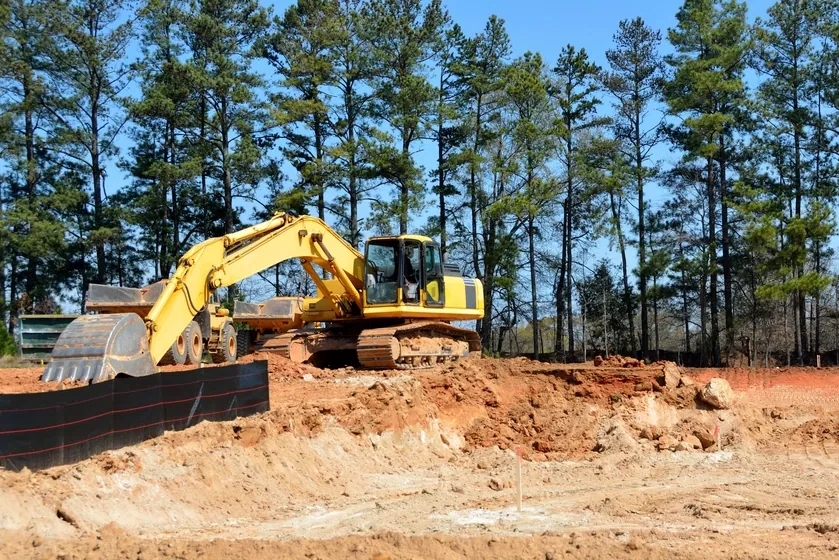
It is Monday morning, a quarter past seven. A landscaper drives onto your yard with his trailer to collect the mini digger he has reserved for the whole week. Five minutes later a van from a local contractor pulls up. He has come for a mini digger too. You look at your whiteboard, look at the wash bay, and reality hits like a hammer: you have four mini diggers in your fleet, but two are still with customers from last week, one is partly in pieces for a service, and the last one is now on the landscaper's trailer. You are one short.
For a machine rental business, few things are as stressful as preventing double bookings when you have several units of the same type of machine. Whether you rent out six plate compactors, four mini diggers, eight generators or three aerial platforms: keeping an overview is top-level sport. Especially when you work with a mix of contractors who leave machines on site for weeks, and private customers who come to collect a log splitter for one half-day on a Saturday morning.
In this article we leave theory and rates for what they are. We dive into the hard practice of machine rental planning. How do you determine your real capacity, how do you deal with maintenance and cleaning, and above all: how do you set up a system in which you never again have to search for which unit is with which customer.
The problem with 'six identical' machines
If you sell a box of screws, it does not matter which screw you pick. In machine rental that is completely different. Every machine has a life of its own. It has a unique serial number, its own meter reading for the running hours, a specific date for the mandatory safety inspection, and its own rhythm of wear.
When you keep your planning in your head, on a whiteboard or in a simple Excel list, you tend to think in quantities. You think: "I have six plate compactors, so I can say 'yes' to a customer six times." But in rental practice, a machine that has just come back is not immediately available for the next handover. It has to be refuelled, hosed down, checked for damage, and sometimes it is simply time for new oil or belts. If plate compactor number four is handed in covered in mud at 16:30, it cannot go straight out again with another customer at 07:00 the next morning. Unless you plan the changeover time and the specific unit flawlessly.
Decision table: planning per unit or per quantity?
The single most important choice you make when setting up your machine rental planning is the planning method. Broadly there are two flavours: planning on the basis of a stock quantity, or planning on the basis of unique units. The table below shows why choosing 'per unit' is the only right option in equipment rental.
| Planning per quantity (stock method) | Planning per unit (object method) | |
| How it works | You have one item "Plate compactor 1500kg" with a stock of 6. With each reservation the number drops to 5. | You have six unique items (Plate compactor 1 to 6), each with its own calendar. You rent out a specific serial number. |
| When it works | For bulk goods without an engine or inspection requirement, such as site fencing, scaffold tubes or traffic cones. | For machines with running hours, engines, inspection stickers and a high purchase value (mini diggers, generators, earth augers). |
| When it goes wrong | If a machine comes back broken, you no longer know afterwards which customer had that particular machine last week. | It takes a little more time when you set up your range, because you have to enter every serial number separately. |
| What you lose | Traceability. You cannot record running hours, you do not know when one specific machine needs maintenance, and recovering damage becomes impossible. | Nothing. You have full control over the history of every individual machine in your fleet. |
The need for traceability applies in every professional rental niche. This principle is just as important for aerial platform rental or the broader tool rental.
Why planning per quantity costs you money
If you plan per quantity, you lose the history of your equipment. Suppose a customer calls on Tuesday to say that the hydraulic hose of the mini digger has split. If all you have on the rental slip is "1x mini digger", you do not know whether this is the new machine that is three months old, or the machine that was actually due for a major service next week.
More important still: without a link between customer and serial number, you are in a weak legal position when it comes to damage claims and withholding a deposit. After all, you cannot prove that this particular customer was responsible for the dent in the bonnet of unit number three. Read more about handling this in our article on deposits and damage when renting out tools and on liability when renting out scaffolding.
Calculating your effective capacity
To never double-book again, you have to stop calculating with your theoretical maximum capacity and start planning your effective capacity.
Effective capacity is the theoretical availability of all your machines, minus the time needed for changeovers, cleaning, repairs and planned maintenance.
We make this concrete with a worked example. For this example we use assumptions that you should replace with the actual times in your own business.
The situation: six plate compactors, one week
 Theoretical capacity: 6 machines × 7 days = 42 machine days available for rental.
- Assumption 1 (changeover time): Each handover and return together takes half a day (hosing down, refuelling, checking). After every rental period we block the next day as 'Changeover', rounded up on the calendar.
- Assumption 2 (maintenance): Plate compactor 4 has reached its running hours for a major service. We block it for two full days.
The worked example in practice
So what does that week look like on a visual planning board where you plan per unit?
| Machine | Monday | Tuesday | Wednesday | Thursday | Friday | Saturday | Sunday |
| Plate compactor 1 (SN: 101) | Rented | Rented | Rented | Changeover | Free | Rented | Changeover |
| Plate compactor 2 (SN: 102) | Rented | Changeover | Free | Free | Rented | Rented | Rented |
| Plate compactor 3 (SN: 103) | Free | Rented | Rented | Changeover | Free | Free | Free |
| Plate compactor 4 (SN: 104) | Maintenance | Maintenance | Free | Rented | Rented | Changeover | Free |
| Plate compactor 5 (SN: 105) | Rented | Rented | Rented | Rented | Rented | Rented | Changeover |
| Plate compactor 6 (SN: 106) | Free | Free | Rented | Changeover | Rented | Changeover | Free |
The hard conclusion from this overview: Take a look at the Friday in this table. You own six plate compactors. However, Plate compactor 1 and 3 are free, while Plate compactor 2, 4, 5 and 6 are rented out or still have to be turned around after a rental period. Your theoretical capacity on Friday is six. Your effective free capacity to still sell a 'yes' at the counter on Friday morning is exactly two.
If, in this scenario, you had looked at a per-quantity system on Thursday afternoon without seeing which units are still with a customer or being turned around that day, you might have accepted three reservations for the Friday. Then on Friday morning you would have had that annoying double booking at the counter.
The invisible time-eaters in your planning
The worked example above shows that the time between two customers is crucial. In machine rental there are three major factors that determine whether a unit is really available. If you do not plan these tightly, your diary will inevitably jam.
1. Changeover time: handover and return
A machine rarely comes back in showroom condition. With an earth auger the bits have to be cleaned and sharpened, a generator has to be checked for oil level and refuelled, and a mini digger often has to spend another half hour in the wash bay to get the clay off the tracks. If you plan in tight half-days (for example back in the morning, out again in the afternoon), the changeover time has to be a hard block in your diary. Is it not there? Then the afternoon customer stands waiting until you have cleaned the machine with the pressure washer.
2. Planned and unplanned maintenance
Maintenance based on running hours is the heartbeat of a healthy rental business. You have to be able to see at a glance which machine needs to come out of circulation. This means you must be able to take a unit 'out of rental' in your calendar, without having to remove the product from your website altogether. The machine has not gone, it is simply occupied by your own mechanic.
3. Logistics: delivery and pick-up vs. collection
A major pitfall in planning lies in the words "it is with the customer". Especially with heavier equipment that you, as the rental business, deliver and pick up yourself, the rental period on paper is often shorter than the occupancy in practice.
Suppose a contractor hires an aerial platform up to and including Friday afternoon at 16:00. On paper the rental is over. But your driver has no time left on Friday afternoon to pick it up; that only happens on Monday morning. If your planning tool only looks at the invoiced rental period, the aerial platform appears to be available on Saturday. But in reality the machine is still behind a fence on a closed building site. Good planning therefore records not only the paid rental time, but the actual physical location of the machine up to the moment it is taken back in at your yard.
One overview: the perfect planning board
So how do you get rid of those stressful Monday mornings? The solution lies in abandoning systems that were not made for rental. A whiteboard does not warn you when you schedule a machine twice. An Excel list does not automatically block half a day for cleaning. And a webshop built for selling shoes does not understand that you have six unique serial numbers that all need their own diary.
You need one visual overview in which all units are listed one below the other, and time (days or weeks) runs horizontally. A digital planning board on which colour codes show you straight away:
- This plate compactor is reserved.
- That mini digger is in maintenance.
- This generator still has to come back today and be turned around.
- This aerial platform is ready for the next handover.
In a system like that you do not book a 'Plate compactor'. You specifically book 'Plate compactor 104' for the customer. Does number 104 break down on site? Then you adjust the reservation in the system and assign 'Plate compactor 105' as the replacement machine with one click, after which number 104 is immediately marked as defective/in maintenance for the rest of the week.
This is the difference between firefighting and professional capacity management.
In Bookedin every machine gets its own calendar and you see all units neatly side by side in one clear availability overview, so that for each serial number you know exactly who has it, when it comes back and how much changeover time is left. Discover here how our reservation system for construction equipment makes your planning reliable and clear again.