


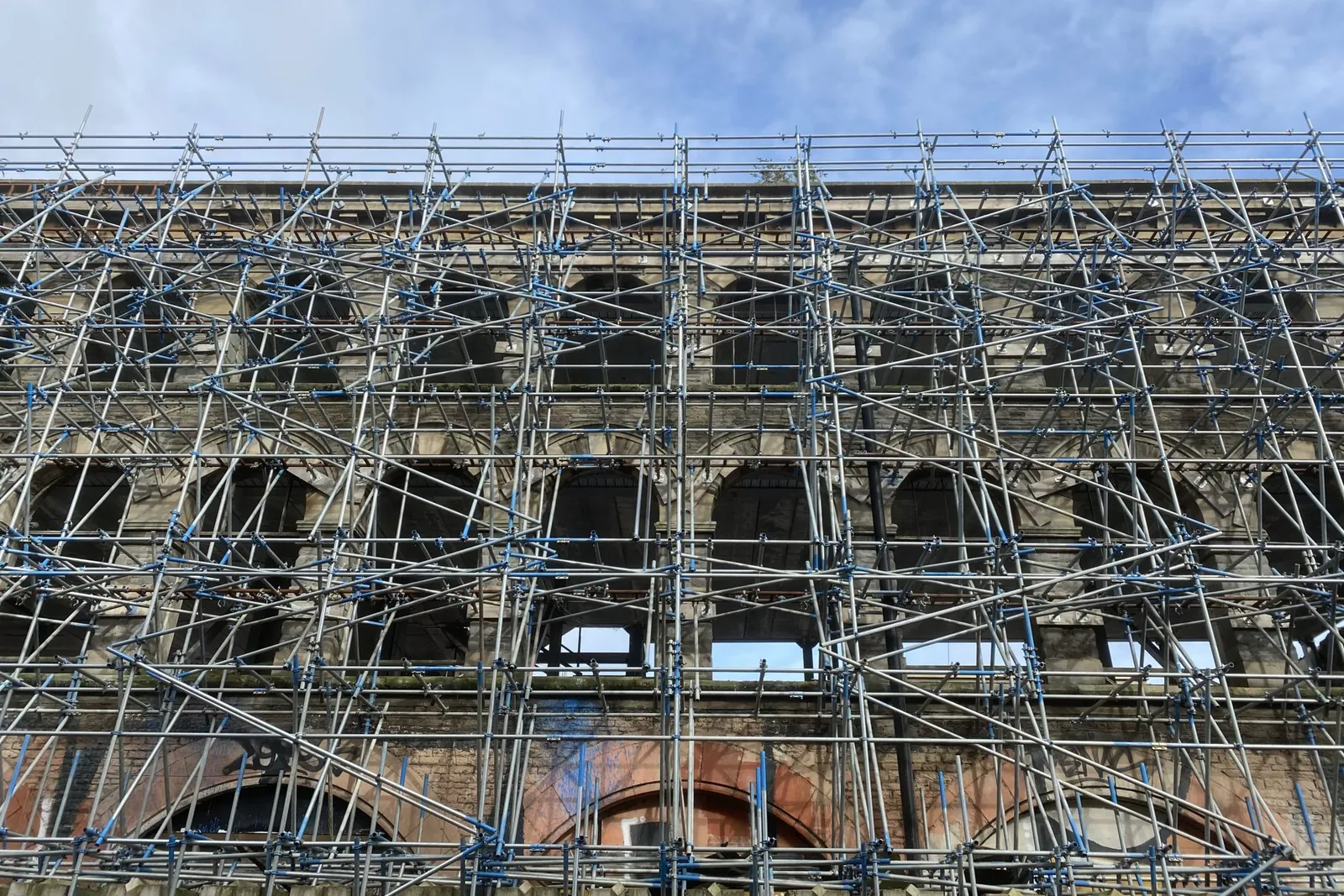
It is eight o'clock on a Saturday morning. A private DIYer drives onto the yard with an empty trailer to collect a mobile scaffold tower for painting his dormer window. He is given the frames, braces and castors, throws the lot in the back and drives off in high spirits. On Sunday afternoon the phone rings. It is the hirer. The scaffold has blown over, has knocked the mirror off the neighbours' car, and the DIYer is in hospital with a broken leg.
At that moment only one question goes through your mind: who pays for this, financially and legally?
As the owner of a rental business in access equipment, you build on the quality of your kit every day. Yet the risk of personal injury or property damage is always lurking. Especially when you rent to private customers who underestimate the safety rules, or to contractors who assemble carelessly under time pressure. In this article we explain in sharp detail how liability for renting out scaffolding is regulated under Dutch law, who is responsible in which situation, and how you protect your business with a watertight protocol and the right insurance.
The legal basis: where does your liability end?
As a rental business for mobile scaffold towers, room scaffolds and ladders in the Netherlands, you fall under civil law. The basic rule is that the party renting out is obliged to supply a 'sound product'. If a claim arises, the court looks at two main causes:
 Defect in the equipment (product liability, Article 6:173 of the Dutch Civil Code, BW): Was the accident caused by a hairline crack in a frame, a missing locking pin or a platform that sagged because of metal fatigue? Then liability lies almost entirely with you as the rental business. After all, you made a defective item available.
- Incorrect use or incorrect assembly: Did the scaffold fall over because the hirer did not fit stabilisers, did not apply the castor brakes or put the scaffold up at wind force 6? Then the user has acted carelessly. In that case the hirer is in principle liable for his own injury and for the damage to third parties.
To show that your equipment is sound, you have to meet the applicable standards for access equipment, such as the NEN-EN 1004 standard for mobile scaffold towers and the guidelines in the A-blad Rolsteigers (the Dutch guidance sheet on mobile scaffold towers) from Volandis. A current inspection sticker on your equipment is the minimum requirement here.
Note on deposits and damage: This article deals specifically with liability for accidents and damage. Do you want to know how to handle withholding the deposit, practically and legally, when a scaffold comes back damaged or incomplete? Then read our article on renting out tools, deposits and damage. For the general principles behind deposit clauses, see our guide to withholding a deposit after damage.
Who is liable in these five situations?
In day-to-day practice, arguments about liability rarely arise over theory. They arise over specific incidents on the building site or at the customer's home. The table below gives a direct overview of the five most common claims in the rental of mobile scaffold towers.
| Situation | Who is liable in principle? | What must you, as the rental business, have arranged in advance? |
| 1. The hirer assembles the scaffold incorrectly and falls | The hirer. (Own fault through careless use.) | Demonstrably handing over the official assembly and user instructions (in line with NEN-EN 1004) and a signed confirmation that the hirer has received them. |
| 2. A part of the scaffold turns out to be defective (e.g. a broken weld) | The rental business. (Liable for defective equipment.) | A valid NEN inspection (annual inspection by a certified inspector) plus a recorded visual check at handover. |
| 3. The scaffold damages a facade or a parked car | The hirer. (Damage to third parties through use.) | General terms and conditions stating that use is at the hirer's own risk and that he must have business liability insurance (AVB) or personal liability insurance (AVP). |
| 4. The scaffold is stolen from the building site | The hirer. (Responsible for safekeeping during the rental period.) | A clear theft clause in the rental contract, including the obligation to store the scaffold under lock and key or chained up outside working hours. |
| 5. The hirer uses the scaffold above the permitted working height | The hirer. (Exceeding safety standards.) | Clearly stating the maximum platform height and working height on the rental slip and in the assembly instructions, including the rules for anchoring. |
Exactly the same applies to the rental of related machines and equipment. See also our solutions for renting out construction equipment and aerial platform rental.
Three pillars to cover your rental business legally
As a rental business you do not want to depend on a customer's common sense. You have to build up evidence in advance. Should a personal injury lawyer or an insurer come knocking, you want to show at the touch of a button that you have met every duty of care. That rests on three pillars.
Pillar 1: Watertight general terms and conditions
In your rental terms you lay down the rules of the game. Make sure the following points are included explicitly:
- Exclusion of consequential loss: You are not liable for the contractor's delay losses if a scaffold cannot be put up in time.
- Duty of inspection for the hirer: The hirer is obliged to inspect the equipment for visible defects and completeness immediately on receipt.
- Ban on sub-letting or unauthorised use: The scaffold may only be used by people who are familiar with the assembly rules.
- Indemnity for incorrect use: The hirer indemnifies your rental business against third-party claims if the accident is the result of inexpert assembly or operation.
Pillar 2: Demonstrable inspection and maintenance (NEN-EN 1004)
Every mobile scaffold tower in your rental fleet must be inspected at least once a year by a qualified inspector. Every frame, platform, castor and diagonal brace has a unique identification (for example a barcode or number) and a valid inspection sticker.
Should a platform break, the court will demand your inspection reports. Can you not produce them? Then legally you are one-nil down and you have by definition failed seriously and culpably.
Pillar 3: A tight handover protocol in the yard
Most accidents happen because the hirer leaves out the stabilisers "because the alley is too narrow", or changes the assembly height without extra anchoring. Your best defence is showing that the hirer knew exactly what was and was not allowed when he collected the equipment. You record this in a fixed handover protocol.
Printable handover protocol (checklist for access equipment)
Use the checklist below every time you hand over a mobile scaffold tower or room scaffold. Have the hirer sign this list for approval, or confirm it digitally, before the equipment leaves the yard.
================================================================================
          HANDOVER PROTOCOL & SAFETY CHECK FOR ACCESS EQUIPMENT
================================================================================

Order number: ________________________    Handover date:  ______________________
Hirer's name: ________________________    Scaffold type:  ______________________

[ ] 1. INSPECTION STICKER CHECKED
    All parts handed over carry a valid annual NEN inspection.

[ ] 2. VISUAL INSPECTION CARRIED OUT
    The equipment has been checked for cracks, dents, weld defects, dirt
    (such as concrete or paint residue) and working castor brakes.

[ ] 3. COMPLETE ACCORDING TO THE RENTAL SLIP
    Number of frames, diagonal/horizontal braces, platforms (with/without
    hatch), toe boards, castors/spindles and locking pins checked and complete.

[ ] 4. ASSEMBLY INSTRUCTIONS HANDED OVER / AVAILABLE
    The official assembly and user manual (NEN-EN 1004 / A-blad Rolsteigers)
    has been handed over on paper or made available digitally.

[ ] 5. MAXIMUM PLATFORM AND WORKING HEIGHT STATED
    Maximum permitted platform height for this configuration: _________ metres.
    Maximum working height: _________ metres.

[ ] 6. SAFETY RULES DISCUSSED
    - Stabilisers are mandatory from the prescribed height.
    - Do not move the scaffold with people or loose material on the platform.
    - Apply the castor brakes immediately after every move.
    - Stop outdoor use at wind force 6 or higher (anchor/dismantle scaffold).

[ ] 7. CONDITION OF MEANS OF TRANSPORT CHECKED
    For transport on a trailer: equipment is properly secured and tied down.

[ ] 8. BUILDING / FACADE / SURROUNDINGS
    The hirer declares to be familiar with the ground (sufficient bearing
    capacity) and guarantees a safe distance from overhead power cables.

--------------------------------------------------------------------------------
The hirer declares to have gone through the points above, to have received the
equipment in good condition and to be familiar with the safety rules.

Signature / Hirer's agreement:              Signature / Handover by rental firm:

________________________________________    ____________________________________
================================================================================
Your insurance: 2 crucial questions for your adviser
Even with the best terms and inspection stickers you can end up in legal proceedings. Your insurance portfolio is your last safety net. For a business that rents out scaffolding, two types of policy matter:
- Business liability insurance (Aansprakelijkheidsverzekering voor Bedrijven, AVB): This cover protects your business when you, as the rental business, are held liable for personal injury or property damage caused by your equipment (for example in the case of a defective weld).
- Own goods-in-transit or equipment insurance: Protects your property against physical damage, theft or damage during transport.
Insurance policies often contain strict exclusion clauses for 'rental of access equipment to third parties'. Call your insurance adviser tomorrow and ask him or her exactly these two questions:
- Question 1: "Does our current AVB policy cover liability for personal injury to third parties where there is a suspected defect in rented access equipment (mobile scaffold towers/ladders), and does this cover also apply when we rent to private individuals?"
- Question 2: "What specific requirements does the insurer set in the policy conditions for our handover and inspection protocol, to prevent cover being refused after a serious accident?"
Going digital: how to secure the terms in advance
Having paper forms physically signed at a busy counter on a Saturday morning often leads to sloppiness in practice. If it is raining or there is a queue of five customers, handing over the assembly instructions is quickly forgotten.
With an online booking system you automate this process. In Bookedin you can easily add an agreement field for your rental terms and assembly instructions to the booking form. As a result, every hirer has to confirm the terms and the safety instructions for the mobile scaffold tower explicitly before the reservation is made final. That way the legal proof of agreement is always linked digitally and directly to the booking in question in your online rental system for scaffolding.