


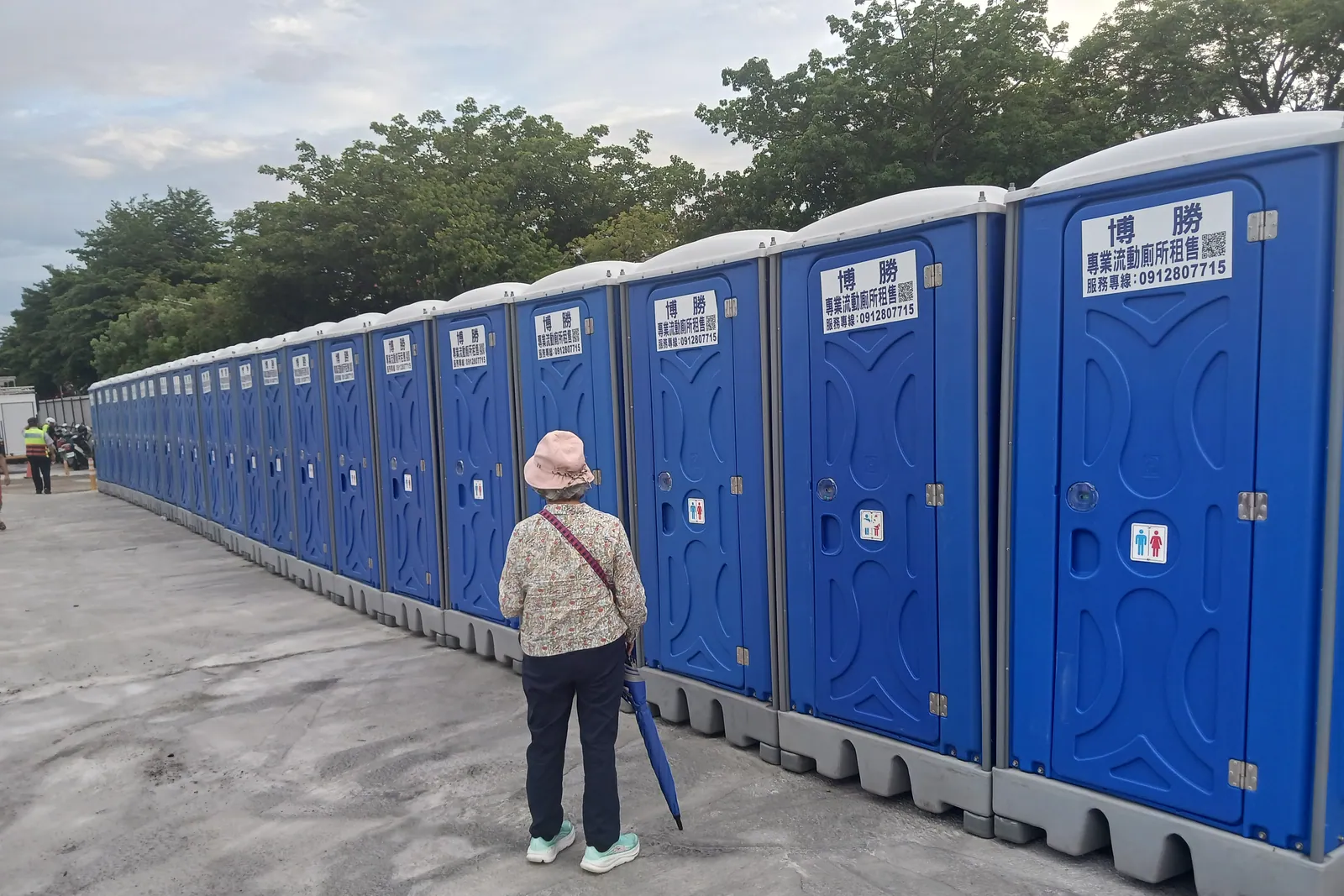
When you organise the routes and logistics of your portable toilet rental tightly, you prevent service vehicles from driving around aimlessly and rising fuel costs from evaporating your profit margin. Transporting portable toilet cabins, urinal units and luxury toilet trailers calls for a smart combination of fixed weekly cleaning routes on construction sites and fast placements at events. If you chase individual requests without a clear regional plan, you lose hours of travel time and run into high disposal costs at the sewage treatment plant (RWZI in Dutch). With clustered trips, a tight check on tank and weight on the service vehicle and clear agreements on the accessibility of the pitch, you keep the logistics chain of your toilet rental under control.
In short: In toilet rental, the split between long-term construction projects and short events determines how you lay out your routes. Cluster the weekly cleaning rounds on construction sites tightly per region and combine the delivery of event toilets with fixed return loops. Keep a sharp eye on the maximum payload of vacuum trucks, statutory discharge regulations and accessibility for the suction hose.
Toilet rental logistics is the integrated planning, transport, cleaning and removal of sanitary facilities and waste water, in which vehicle capacity and geographical routes are matched to each other as well as possible.
Logistical comparison per type of toilet rental
Not every cabin or trailer calls for the same transport and cleaning logistics. The difference between one portable toilet cabin on a long-running construction project and fifty urinal units at a weekend festival determines how you set up the planning of your service vehicles.
| Segment and type of toilet | Fixed route frequency | Means of transport and capacity | Logistical challenge and waste water |
| Construction rental (portable toilet cabins) | Weekly fixed cleaning round on a fixed working day. | Pick-up with a fitted body or service vehicle with a vacuum tank (1,000 - 3,000 litres). | Cabins get blocked by building materials; mandatory suction distance of at most 10 to 15 metres. |
| Events (urinal units and cabins) | Peak delivery on Thursday/Friday, collection on Monday. | Lorry with a tail lift or heavy turntable trailer (10 to 20 cabins per trip). | High peak pressure at the yard; interim pumping out on the site requires fast pump capacity. |
| Luxury toilet trailers (flush toilets) | Placement by appointment; interim cleaning on request. | Car and trailer combination on a BE licence, or a lorry with a tow bar (depending on total weight). | Water supply (Geka coupling) and a direct sewer connection or a large waste water tank needed. |
Planning weekly cleaning routes on construction sites smartly
The backbone of a stable toilet rental business is construction rental. Construction companies often rent a chemical toilet or flush toilet for several months. The rental price includes weekly cleaning as standard. Force yourself to mark out these cleaning rounds tightly by geography.
When a driver is in the northern region on Tuesday, all toilets in those specific postcode areas are washed, pumped out and given fresh blue flushing fluid and new toilet paper on Tuesday. A construction worker who rings on Wednesday to ask whether his toilet can be cleaned a day earlier because it happens to have got filthy is someone you should politely refuse, or charge an extra service fee. If you make a twenty-kilometre detour for one single toilet, you immediately make a loss on that particular cabin. Include the build-up of these costs in your normal rental rates.
Axle loads, payload and the permit for discharging
One of the biggest invisible risks in toilet rental logistics is the laden weight of your service vehicle. A vacuum tank full of waste water is heavy. One litre of collected waste water including flushing fluid weighs about one kilogram. A service vehicle on a chassis that can be driven on a category B licence, with a vacuum tank of 1,500 litres, is already at its maximum payload after pumping out ten to twelve full toilets.
If you exceed the permitted maximum mass or the permitted axle load, you risk sky-high fines and an immediate driving ban at a check by the Dutch Human Environment and Transport Inspectorate (ILT). Set up your routes so that drivers can unload along the way at a recognised sewage treatment plant (RWZI) or at your own yard, if you hold a valid environmental permit for discharging waste water. For the local rules on waste water, consult Business.gov.nl, the Dutch government site for entrepreneurs.
Accessibility of the pitch and the suction hose
A classic logistical delay arises on the construction site itself. A driver arrives for the weekly cleaning round, but on Monday afternoon the contractor has put two pallets of bricks or a large container exactly in front of the door of the portable toilet.
The vacuum hose of the service vehicle has a limited length, usually between 10 and 15 metres. If the driver has to walk thirty metres with a dirty hose across a boggy construction site, he loses valuable time and there is a risk of physical overload.
Set clear ground rules in your terms:
 Free passage: The toilet must be placed no more than five metres from a paved road that vehicles can drive on.
- Obstacle-free zone: The door of the cabin must be able to swing fully open without being obstructed by scaffolding or building materials.
- Liability when the toilet cannot be reached: Is the toilet unreachable? Then the cleaning is skipped, but the weekly visit is still invoiced in full. For recording these rules properly, see our article on liability and terms in rental.
Where tight route logistics cause friction
In practice, clustering routes tightly also has its limits and bottlenecks. Not every situation can be pressed into a fixed box in advance.
When there is an emergency, such as a toilet blown over by a storm or a cabin that has been wrecked on an event site, the customer expects you to be on the doorstep within two hours to solve the problem. If your only service vehicle is at that moment eighty kilometres away in another region, you face a choice: interrupt your tight route and incur high fuel costs, or risk an angry customer.
In addition, carrying spare parts in the service vehicle (such as separate portable pumps, toilet seats, door locks and roof hooks) means there is less room left for fresh water and toilet paper. You constantly have to find the balance between a fully loaded service vehicle and efficient deployment on the road. This ties in with the principles of clustering delivery routes for party rental and scheduling multiple units.
How to start this week
Bring more structure to your logistics process straight away in the coming days with these five steps.
- Divide your rental area into fixed district zones and link a fixed weekday for the cleaning round to each zone.
- Weigh your service vehicle empty and full at a weighbridge to establish the exact maximum number of toilets pumped out per trip.
- Give every driver a tablet or smartphone showing the access situation and the pitch for each construction site.
- Include in your delivery terms a hard maximum distance of five metres between the paved road and the toilet.
- In Bookedin you use adding custom fields to ask at the time of booking for the exact surface and the expected distance to the carriageway, so your trip planning knows in advance where the vehicle can park.
Streamlining the routes and logistics of your toilet rental gives you a grip on your daily operations. You save on fuel, avoid fines for overloading and make sure your drivers can complete their cleaning rounds safely, cleanly and well within working hours.
Last checked on 8 October 2026.
Frequently asked questions
For long-term rental on construction sites, weekly cleaning is the standard. The rental company pumps out the holding tank, rinses the cabin clean with a pressure washer, fills the reservoir with fresh biodegradable toilet fluid and tops up the supply of toilet paper. At intensively used events, daily or continuous interim cleaning may be necessary.
On a standard turntable trailer behind a van, 6 to 10 cabins fit on average. On a large box van or a lorry with a tail lift you can carry 12 to 24 cabins, stacked or linked. The limitation is usually not the physical volume but the maximum axle load of the lorry as soon as fresh water is carried as well.
If the service vehicle cannot get within 5 metres of the toilet because of stacked building materials, fencing or boggy ground, the driver cannot pump the toilet out safely. In that case the cleaning visit is skipped, but the costs of the wasted trip are still charged on to the hirer.
In the Netherlands, the waste water collected from chemical and portable toilets may only be discharged at an officially designated location, such as a sewage treatment plant (RWZI) of the water board, or through an approved commercial waste water connection with a grease and sludge trap on your own premises. Simply discharging into a street drain is strictly prohibited and a punishable offence.
That depends on the capacity of the waste water tank on the vehicle and how full the cabins are. With an average waste water tank of 1,500 litres on a small chassis you can pump out roughly 10 to 15 averagely filled cabins before the vehicle has to drive to a disposal site to unload.
A chemical toilet works with a holding tank under the seat and needs no fixed sewer or water connection, which makes placement very flexible. A portable flush toilet or toilet trailer requires a permanent water supply and a direct drain to the sewer or a heavy holding tank, which makes transport and setup on site logistically more laborious.
Any other questions? You can always email us at info@bookedin.nl.